
WESTERN PHILOSOPHERS
|
WESTERN PHILOSOPHERS |
|
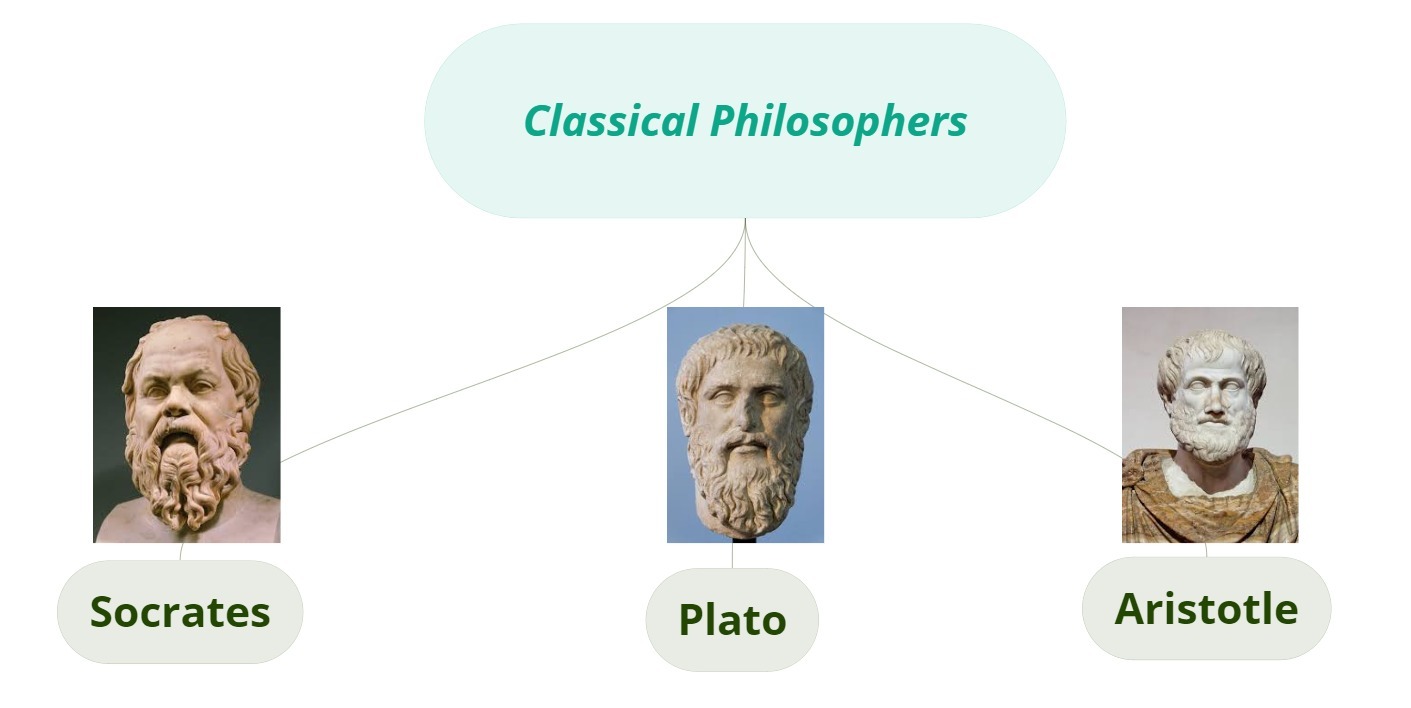
-
Socrates
Ethical Ideology
Socrates' ethical ideology is rooted in Virtue Ethics, which emphasizes character and the pursuit of moral excellence as the foundation for ethical behavior. For Socrates, the central objective of ethical life is to develop virtuous qualities through self-knowledge, wisdom, and moral reasoning.
- Virtue Ethics
Virtue ethics is a moral framework concerned with character development rather than rule-following or consequence-based actions. Its goal is to help individuals become better people through self-improvement and moral introspection. In Socratic thought, this approach involves understanding what is virtuous, nurturing the motivation to be virtuous, and behaving consistently with one’s moral understanding. For Socrates, knowledge itself is virtue, and thus, an informed individual will naturally act ethically. He believed that this intrinsic understanding of morality would lead to a life of true happiness and inner harmony.
- Unity of the Virtues: Central to Socratic Virtue Ethics is the unity of virtues, the concept that virtues are interconnected, with one virtue depending on the presence of others. For example, courage requires wisdom, wisdom necessitates moderation, and moderation is reinforced by courage. Socrates envisioned an ideal virtuous person as someone possessing all virtues, achieved through a lifelong commitment to moral and intellectual growth.
Ethical Morals
Socrates emphasized several guiding principles that shaped his moral beliefs:
- Virtue as Knowledge: Socrates proposed that moral understanding is essential for ethical action and that such understanding can be taught. He famously asserted, “the unexamined life is not worth living,” encouraging individuals to pursue wisdom and morality above self-interest.
- Virtue as Happiness: He believed that a virtuous life is inherently rewarding, bringing true happiness and fulfillment. This happiness is not derived from external pleasures like wealth or power but from a life aligned with the well-being of one’s soul.
- Pursuit of the Good: Through ethical intellectualism, Socrates held that people naturally seek the good but often fail to achieve it due to ignorance. He argued that no one willingly chooses to do wrong; rather, moral failings stem from a lack of understanding about what is truly good and beneficial.
Ethical Dimensions
Socrates’ ethical views encompass several key dimensions:
- Intellectual Development as a Moral Imperative: Socrates saw knowledge as essential for moral action. The pursuit of understanding is, therefore, not merely intellectual but has profound ethical implications, as it enables individuals to live morally and contribute positively to society.
- Internal Harmony: A life of virtue, according to Socrates, fosters internal harmony, whereas injustice leads to internal discord and confusion, hindering one’s ability to act effectively and ethically.
- Moral Utility and Long-Term Happiness: Socrates argued for long-term happiness through ethical living. Happiness, in his view, is found in nurturing one’s soul and fulfilling one’s true potential rather than seeking fleeting physical or material satisfaction.
- Justice and Functional Excellence: Socrates saw justice and virtue as forms of functional excellence—the just person, by living virtuously, performs the functions of the human soul well. This idea suggests that a just life not only benefits the individual but also contributes to a harmonious and ethical society.
Socrates’ ethical philosophy is centered on virtue ethics and the unity of virtues, emphasizing self-knowledge, intellectual development, and moral harmony as pathways to a fulfilling life. By fostering virtues and pursuing the good, individuals can achieve both personal happiness and contribute to a just, well-ordered society.
-
Plato
Ethical Ideology
Plato’s ethical ideology centers on the Theory of Forms and the pursuit of the Good. For Plato, true knowledge and moral behavior are achieved through an understanding of the eternal, ideal Forms, which are the purest, most perfect representations of concepts like justice, beauty, and goodness. He posited that ethical living involves aligning one’s soul with these ideal Forms to achieve the highest moral standards and true understanding.
- Theory of Forms and the Concept of the Good
Plato believed that the Good is the highest Form and the ultimate principle from which all virtues and knowledge derive. By contemplating the Good, individuals gain insight into the true nature of justice, courage, wisdom, and other virtues. According to Plato, ethical knowledge is the result of intellectual development that allows one to discern these ideal forms and apply them in life. For Plato, philosophical contemplation is essential to reach moral excellence, making it possible to govern both oneself and society justly.
Ethical Morals
Plato’s moral thought includes several core principles that shape his understanding of virtue and justice:
- Virtue as Harmony of the Soul: Plato argued that a virtuous life requires harmony among the three parts of the soul—Reason, Spirit, and Appetite. For moral integrity, Reason should rule over Spirit and Appetite, creating an inner balance where each part performs its function without interference, much like the ideal governance of a well-ordered state.
- Justice as the Highest Virtue: In Plato's philosophy, justice is seen as both a personal and social virtue. Justice exists when each part of the soul or society fulfills its role appropriately, with Reason guiding decisions and creating harmony. Justice, therefore, is the key to achieving individual happiness and societal well-being.
- Moral Education through Philosophical Training: Plato advocated for rigorous moral education, where philosophers, by their training, could discern the Good and lead society. He believed that only those who pursue philosophy and understand the Good can govern others justly, as only they possess true knowledge of virtue and the wisdom to apply it.
Ethical Dimensions
Plato’s ethical framework covers various dimensions emphasizing knowledge, harmony, and justice:
- Intellectual and Moral Development: For Plato, education is central to ethics, as knowledge of the Forms enables a person to live a virtuous life. Only through intellectual enlightenment can one truly understand and practice ethical principles, making philosophical contemplation the basis for moral growth.
- Social Responsibility and Justice: Plato’s ethics extend to societal organization. He believed that a just society reflects the order of a virtuous individual, with each class and person fulfilling their role harmoniously. This alignment creates a just society where every individual contributes to the collective good, and justice serves as the foundation for social stability.
- Philosophical Rulership: Plato's vision of governance involves rule by philosopher-kings who possess knowledge of the Good. These rulers would govern based on wisdom rather than personal gain, ensuring policies reflect ethical standards and contribute to the common welfare.
- Virtue as Eudaimonia (Flourishing): In Plato’s view, living virtuously leads to eudaimonia, a state of flourishing and fulfillment. This idea links personal happiness with ethical living, emphasizing that the virtuous person, through harmony and justice, achieves true satisfaction.
Plato’s ethical philosophy is a pursuit of the Good through knowledge of the Forms, advocating for justice as both a personal and societal virtue. His emphasis on intellectual development, moral harmony, and just governance underlines his belief that ethical living creates individual and collective flourishing, making virtue both a personal and civic responsibility.
-
Aristotle
Ethical Ideology
Aristotle’s ethical ideology is grounded in Virtue Ethics, focusing on achieving eudaimonia (flourishing or well-being) through the cultivation of virtuous character traits. Unlike his teacher Plato, who emphasized the ideal Forms, Aristotle’s approach is teleological—focused on the purpose (telos) of human life, which he saw as achieving a state of fulfillment and excellence through practical virtues. His Nicomachean Ethics explores how virtuous actions, guided by reason, enable individuals to reach their highest potential and live a good life.
- The Golden Mean - Central to Aristotle’s ethics is the Golden Mean, the idea that virtue lies in a balanced response between extremes. For Aristotle, ethical behavior requires finding a middle path between deficiency and excess, such as courage lying between cowardice and recklessness. This balance enables individuals to respond wisely and appropriately to different situations, ensuring actions align with moral character.
Ethical Morals
Aristotle identified several core virtues, emphasizing that these traits develop through habit and practical experience. Some of his key moral principles include:
- Moral Virtues as Habits: For Aristotle, virtues are cultivated by repeated actions. Virtue is not innate but is learned and practiced until it becomes a stable character trait. This idea underscores that moral development is a lifelong commitment to virtuous living.
- Virtue as Rational Activity: Aristotle argued that humans are distinct because of their capacity for rational thought. Virtuous actions are guided by practical wisdom (phronesis), where reason determines the best course of action. Reason, therefore, plays a central role in distinguishing virtuous actions from vices.
- Purpose of Human Life (Eudaimonia): Aristotle’s ethics emphasize that the ultimate goal of human life is eudaimonia—flourishing or living in accordance with reason. This state of well-being is achieved when a person lives virtuously, fulfilling their potential through rational and ethical actions that promote personal and collective good.
Ethical Dimensions
Aristotle’s approach covers several dimensions that reflect a comprehensive ethical framework, focusing on character, community, and practical wisdom:
- Moral Character and Virtue: Aristotle’s ethics emphasize the development of moral character over adherence to rules. He believed that ethical living is about becoming a virtuous person, not merely following moral obligations. Character traits such as courage, generosity, and honesty define an ethical life.
- Role of Practical Wisdom (Phronesis): Aristotle introduced practical wisdom as essential to navigating ethical challenges. This form of wisdom enables individuals to evaluate unique circumstances, balancing emotions, desires, and rational judgment to make morally sound decisions in any situation.
- Community and Social Well-being: Aristotle viewed humans as inherently social beings and believed that a flourishing life requires meaningful relationships and active participation in one’s community. True happiness, for Aristotle, involves contributing to the welfare of others, as individual fulfillment is intertwined with social good.
- Ethics as Habit and Discipline: Virtue requires ongoing practice, discipline, and self-regulation. Aristotle emphasized that moral education and the guidance of experienced mentors are necessary for developing virtues, underscoring that ethical maturity is a gradual, cumulative process.
- Harmony Between Reason and Desire: For Aristotle, a virtuous life balances reason and desire, with reason acting as a guide to ensure desires are aligned with ethical principles. This harmony creates a stable and contented life, fostering well-being through disciplined moral behavior.
Aristotle’s ethical philosophy focuses on achieving eudaimonia through virtuous character development. His ideas emphasize balance (Golden Mean), practical wisdom (phronesis), and the fulfillment of human potential in community and social life. Unlike rule-based systems, Aristotle’s Virtue Ethics highlight personal growth through rational action, making moral character the foundation of individual and societal well-being.
Other Philosopher
-
Immanuel Kant
Ethical Ideology
Immanuel Kant's ethical philosophy is primarily grounded in Deontological Ethics, which emphasizes the inherent rightness or wrongness of actions based on adherence to moral duties rather than the consequences of those actions. Central to Kant's ideology is the concept of the Categorical Imperative, a universal moral law that applies to all rational beings, guiding them to act in a way that could be universally acceptable.
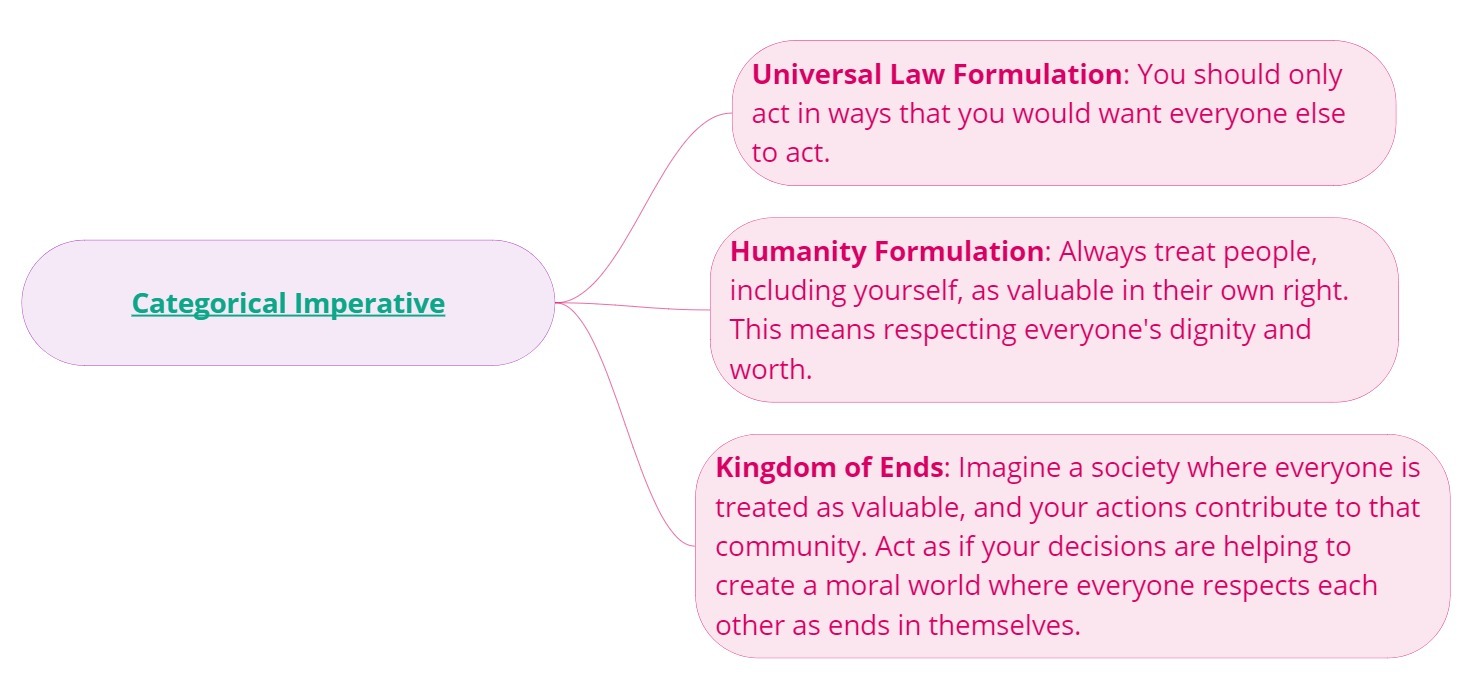
Ethical Morals
Kant’s moral philosophy rests on the following principles:
- Moral Duty: For Kant, morality is rooted in the notion of duty and obligation. Individuals have a moral duty to act according to rational principles, irrespective of personal desires or external influences. Actions are considered morally right if they are done from a sense of duty.
- Autonomy: Kant places significant importance on autonomy, the capacity of rational agents to govern themselves and make moral decisions. He argues that moral agents should be self-legislators who follow laws that they have rationally determined to be moral.
- Universalizability: Kant's ethics require that moral principles must be applicable universally. If an action can’t be universally accepted as a moral law, it is deemed unethical. This principle reinforces the idea of fairness and impartiality in ethical reasoning.
- Respect for Persons: Kant emphasizes the importance of treating individuals with respect, acknowledging their rational nature and moral worth. This respect underpins his ethical system, advocating for the inherent dignity of all individuals.
- Moral Absolutism: Kant’s philosophy advocates for absolute moral rules, meaning certain actions (like lying or stealing) are categorically wrong regardless of context or consequences. This leads to a moral framework that prioritizes integrity and adherence to duty.
Ethical Dimensions
Kant's ethical framework encompasses several critical dimensions that articulate his comprehensive view of morality:
- Rationality and Reason: Kant believed that moral actions must stem from rational thought and reasoning. Ethical decisions should not be based on emotions or inclinations but rather on logical deliberation and adherence to moral laws.
- Moral Law and Freedom: Kant argues that true freedom is not the absence of constraints but the ability to act according to rational moral laws. Moral actions arise from exercising one's autonomy and rational capacity to discern right from wrong.
- Categorical Imperative as Foundation: The Categorical Imperative serves as the fundamental principle guiding moral decision-making. It demands that actions must be considered in terms of their ability to be universalized, ensuring that ethical reasoning is consistent and coherent.
- Moral Intent: For Kant, the intention behind an action is crucial. An action is morally right not just because it leads to good outcomes but because it is performed with the right intention, driven by a sense of duty.
- Ethical Community: Kant's vision includes a moral community where individuals respect one another's autonomy and dignity. This community operates on shared ethical principles, promoting harmony and cooperation through mutual respect.
Kant’s ethical philosophy emphasizes deontological ethics and the Categorical Imperative, positing that moral actions are determined by duty and universalizable principles rather than outcomes. Key concepts include the importance of rationality, autonomy, respect for persons, and moral absolutism. Kant’s framework provides a rigorous approach to ethics, underscoring the necessity of moral law and rational deliberation in achieving a just and ethical society.
-
John Locke
John Locke, a 17th-century English philosopher, is best known for his contributions to political theory, but his ethical ideology and moral philosophy are also significant. Here’s an overview of his ethical ideology, morals, and dimensions:
Ethical Ideology
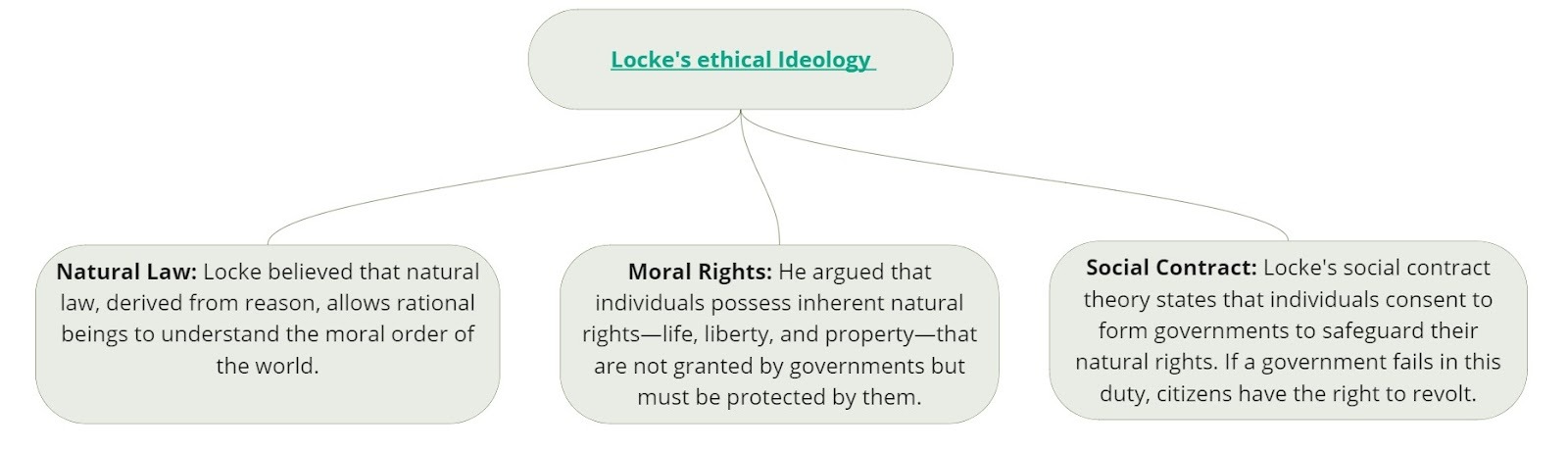
Ethical Morals
Locke’s moral philosophy can be broken down into several key aspects:
- Individualism: Locke emphasized the importance of the individual and personal autonomy. He argued that individuals should be free to pursue their own happiness as long as it does not infringe on the rights of others.
- Tolerance: In his "Letter Concerning Toleration," Locke advocated for religious tolerance, asserting that individuals should be free to practice their religion without government interference, as long as it does not harm others.
- Reason and Ethics: Locke believed that morality is grounded in human reason. He contended that moral truths are accessible through rational thought and that individuals can discern right from wrong.
Ethical Dimensions
Locke's ethical framework can be explored through several dimensions:
- Epistemological Dimension: Locke’s theory of knowledge (empiricism) influences his ethics. He believed that knowledge comes from sensory experience, which informs moral judgments.
- Political Dimension: His ethical beliefs directly inform his political philosophy, particularly regarding governance, individual rights, and the role of the state.
- Personal Dimension: Locke’s emphasis on individual rights and personal liberty reflects his belief in the moral agency of individuals to make choices and bear responsibility for those choices.
- Social Dimension: His social contract theory highlights the moral obligations individuals have to one another and to society as a whole, particularly in terms of protecting rights and promoting the common good.
Locke's ethical ideology is characterized by a commitment to individual rights, the importance of reason, and a belief in a moral order governed by natural law. His ideas have had a profound influence on modern democratic thought, human rights, and ethical discussions in political philosophy.
-
Adam Smith
Ethical Ideology
Adam Smith's ethical philosophy is primarily grounded in Sympathy and Empathy. He argued that moral sentiments arise from our capacity to empathize with others, shaping our moral judgments.
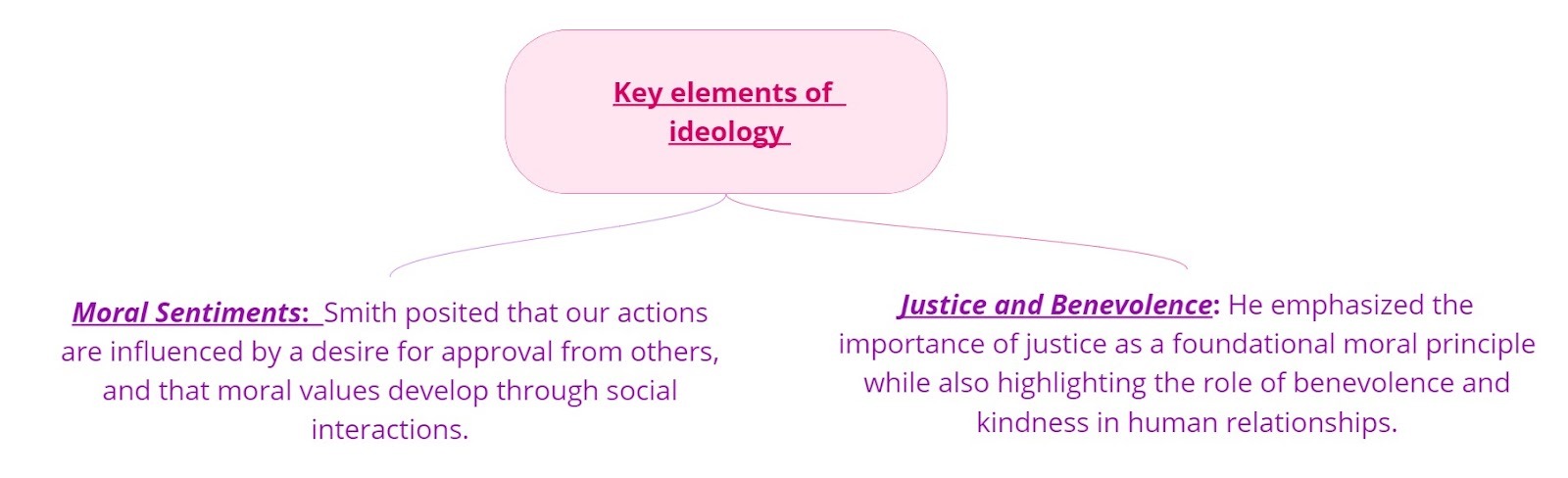
Ethical Morals
Smith’s moral philosophy is based on several core principles:
- Virtue Ethics: He identified virtues such as prudence, justice, and beneficence as essential to moral character, cultivated through social experiences.
- Moral Judgment: Smith believed that moral judgments should be based on the perspective of the impartial spectator, an idealized observer who helps individuals evaluate their actions objectively.
- Interdependence: He recognized that individuals are interdependent within society, suggesting that moral actions contribute to overall welfare and harmony.
Ethical Dimensions
Smith's ethical framework encompasses several critical dimensions:
- Economic Dimension: Smith linked ethics with economics, asserting that moral considerations should guide economic behavior, where the "invisible hand" operates effectively through ethical actions.
- Social Dimension: His emphasis on sympathy underscores the importance of social bonds and communal well-being, indicating that moral behavior enhances social cohesion and trust.
- Psychological Dimension: Smith focused on human psychology, highlighting the role of emotions in moral decision-making. Understanding feelings, both our own and those of others, is crucial for ethical conduct.
- Political Dimension: His ethical views influenced his political philosophy, advocating for a system where individual freedoms coexist with moral obligations to society, promoting a balance between self-interest and the common good.
Adam Smith's ethical philosophy intertwines empathy, virtue, and moral judgment, emphasizing the significance of social relationships in ethical behavior. His insights continue to influence discussions in ethics, economics, and social philosophy, underscoring the connection between moral actions and economic prosperity.
-
Jeremy Bentham
Ethical Ideology
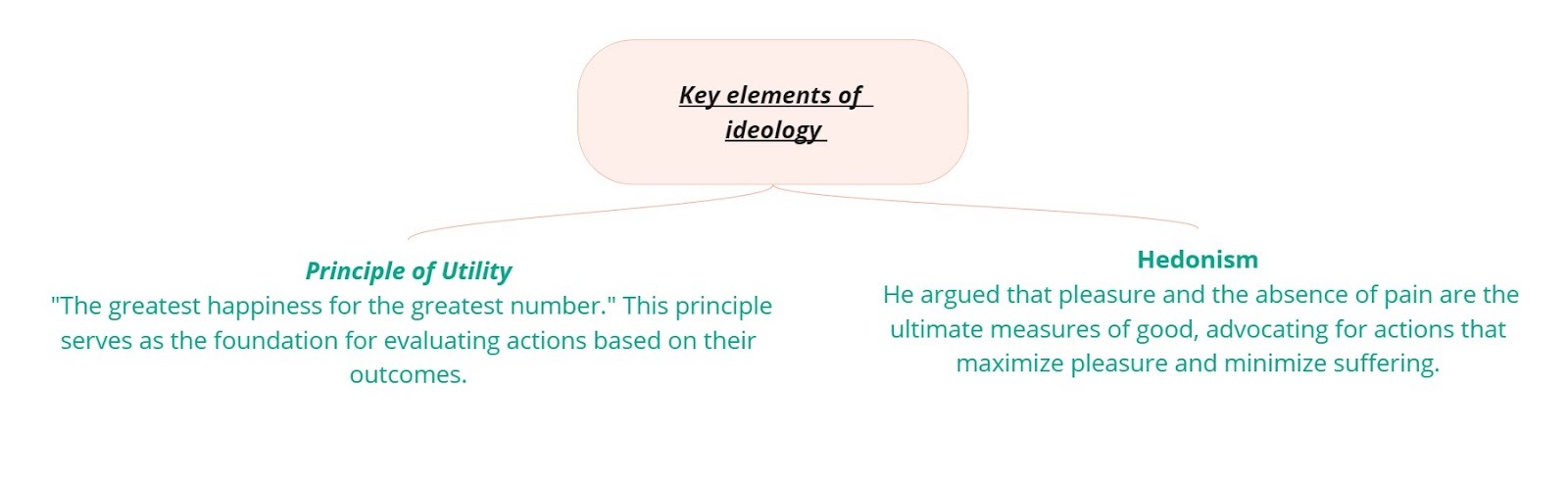
Jeremy Bentham's ethical philosophy is primarily grounded in Utilitarianism, which posits that the moral worth of an action is determined by its contribution to overall happiness or utility.
Ethical Morals
Bentham’s moral philosophy is based on several core principles:
- Consequentialism: Bentham’s ethics emphasize the consequences of actions as the primary basis for moral evaluation. An action is considered morally right if it leads to positive outcomes for the majority.
- Quantification of Pleasure: He proposed a systematic approach to measuring pleasure and pain, known as the "felicific calculus." This calculus assesses actions based on factors such as intensity, duration, certainty, and proximity of the anticipated pleasure or pain.
- Equality: Bentham advocated for equal consideration of interests, asserting that everyone's happiness should be weighed equally in moral deliberations, regardless of social status or identity.
Ethical Dimensions
Bentham's ethical framework encompasses several critical dimensions:
- Social Dimension: Bentham's utilitarianism emphasizes the importance of collective well-being, arguing that policies and laws should be designed to maximize societal happiness.
- Political Dimension: His ethical views significantly influenced political thought, particularly in the development of legal reforms and social policies aimed at promoting the welfare of the populace.
- Psychological Dimension: Bentham's focus on pleasure and pain reflects a psychological understanding of human motivation, asserting that people are driven by the pursuit of pleasure and the avoidance of suffering.
- Pragmatic Dimension: Bentham's utilitarianism is inherently practical, advocating for moral decisions to be based on empirical evidence and the anticipated consequences of actions, rather than abstract principles or doctrines.
Jeremy Bentham's ethical philosophy centers on utilitarianism, emphasizing the importance of outcomes in moral evaluation. Bentham’s framework provides a pragmatic approach to ethics, highlighting the significance of collective happiness and the implications of moral actions on society.
-
John Stuart Mill
Ethical Ideology
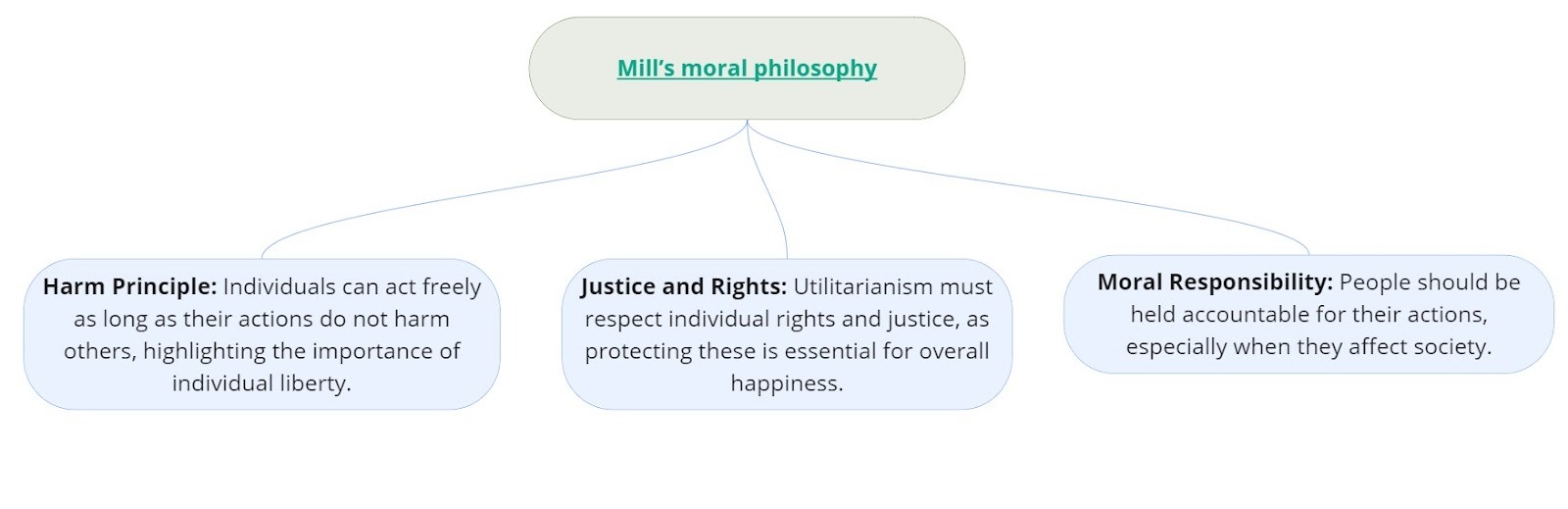
John Stuart Mill's ethical philosophy is primarily grounded in Utilitarianism, which builds upon and refines the principles established by Jeremy Bentham. Mill emphasizes the qualitative aspects of happiness and advocates for a more nuanced understanding of utility.
Key elements of his ideology include:
- Higher and Lower Pleasures: Mill distinguished between higher (intellectual and moral) and lower (bodily) pleasures, arguing that the quality of pleasures should be considered alongside their quantity.
- Principle of Utility: Mill upheld the principle of utility, asserting that actions are right if they promote happiness and wrong if they produce the opposite.
Ethical Dimensions
Mill's ethical framework encompasses important dimensions:
- Social Dimension: Promotes collective well-being and supports policies that enhance happiness while respecting individual rights.
- Political Dimension: Influences democratic thought, advocating for systems that balance personal freedoms with the common good.
- Psychological Dimension: Recognizes that individuals can appreciate higher pleasures and make informed choices.
- Pragmatic Dimension: Focuses on evaluating actions based on their consequences and the complexities of moral situations.
Mill's ethical philosophy refines utilitarianism by stressing the quality of happiness, the harm principle, and the importance of justice and rights. His framework balances individual freedoms with the pursuit of collective well-being, impacting both moral philosophy and political thought.
-
Thomas Hobbes
Ethical Ideology
Thomas Hobbes' ethical philosophy is rooted in Social Contract Theory, which posits that moral and political obligations arise from an implicit contract among individuals. Hobbes viewed human nature as self-interested and competitive, necessitating a strong authority to maintain order and prevent conflict. Key elements of his ideology include:
- State of Nature: Hobbes described the natural condition of humanity as one of chaos and constant conflict, famously stating that life in this state is "solitary, poor, nasty, brutish, and short."
- Social Contract: To escape the chaos of the state of nature, individuals collectively agree to form a social contract, surrendering some of their freedoms to a sovereign authority in exchange for security and order.
Ethical Morals
Hobbes’ moral philosophy is based on several core principles:
- Moral Relativism: Hobbes argued that moral values are not absolute but are created through social agreements and conventions established in the context of a social contract.
- Self-Preservation: The fundamental moral duty, according to Hobbes, is to ensure one’s own survival and security, as individuals act primarily out of self-interest.
- Obedience to Authority: Hobbes emphasized the importance of obeying the sovereign authority established by the social contract, as this is essential for maintaining peace and preventing a return to the state of nature.
Ethical Dimensions
Hobbes' ethical framework encompasses several critical dimensions:
- Social Dimension: The social contract creates a framework for moral behavior, emphasizing the importance of collective agreements in shaping ethical norms.
- Political Dimension: Hobbes’ ideas significantly influenced political philosophy, advocating for strong, centralized authority to maintain order and prevent anarchy.
- Psychological Dimension: Hobbes viewed human nature as inherently self-interested and competitive, asserting that individuals are motivated by fear and the desire for self-preservation.
- Pragmatic Dimension: His approach is pragmatic, focusing on practical solutions to avoid conflict and chaos, rather than adhering to abstract moral principles.
Thomas Hobbes' ethical philosophy centers on social contract theory, viewing moral obligations as arising from collective agreements to ensure security and order. His framework emphasizes moral relativism, self-preservation, and obedience to authority, shaping both ethical and political thought.


.svg.png)


